Bamboo Lampshade Trend: Why Rattan & Bamboo Pendants Are Everywhere in 2026
Natural materials continue to shape modern interior design, and lighting is no exception. In 2026, bamboo and rattan lamps are no longer niche décor items—they have become mainstream choices for residential and commercial interiors.
Consumers increasingly seek lighting that offers more than illumination. They want products that reflect sustainable living, craftsmanship, and timeless design. As a result, bamboo lampshades and woven pendant lights are gaining popularity across furniture retailers, home décor brands, hospitality projects, and e-commerce marketplaces.
Why Bamboo Lighting Is Growing So Quickly
Several trends are driving the demand for natural woven lighting.
Sustainability Becomes a Purchase Decision
Modern consumers are paying closer attention to:
Bamboo is one of the fastest-growing renewable resources, making it an ideal material for environmentally conscious lighting collections.
Warm, Natural Lighting Creates Better Living Spaces
Unlike metal or plastic shades, woven bamboo allows light to pass through the natural weave, creating soft shadows and warm ambient lighting.
This makes bamboo lighting especially suitable for:
Living rooms
Dining areas
Bedrooms
Restaurants
Hotels
Coffee shops
Boutique retail spaces
The result is a comfortable atmosphere that feels both modern and inviting.
Bamboo Pendant Lamps Lead the Trend
Among all categories, the bamboo pendant lamp has experienced the strongest growth.
Popular applications include:
Pendant lighting naturally becomes a visual focal point, and woven bamboo adds texture and organic character without overwhelming the space.
Large statement pendants are particularly popular in hospitality and luxury residential projects.
Bamboo Wall Lamps Add Decorative Function
The bamboo wall lamp is another fast-growing segment.
Instead of relying solely on ceiling fixtures, designers increasingly use wall lighting to create layered illumination.
Common installations include:
Hallways
Bedrooms
Reading corners
Hotel corridors
Staircases
Accent walls
A woven wall lamp provides both functional lighting and decorative appeal, making it a versatile addition to modern interiors.
Interior Styles That Match Bamboo Lampshades
One reason bamboo lighting continues to grow is its compatibility with many design styles.
Popular interiors include:
Scandinavian
Japandi
Coastal
Bohemian
Tropical
Farmhouse
Modern Organic
Minimalist
Because bamboo has a neutral natural color, it blends easily with wood, stone, linen, cotton, and woven décor.
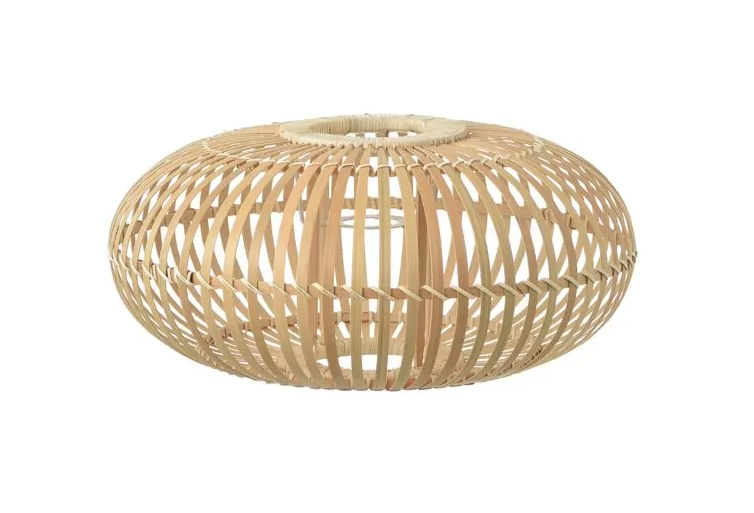
Pumpkin Bamboo Lampshade
Bamboo vs. Rattan: What's the Difference?
Although often grouped together, bamboo and rattan have distinct characteristics.
| Feature | Bamboo | Rattan |
|---|
| Material Structure | Hollow grass | Solid climbing palm |
| Appearance | Clean, linear | Flexible, textured |
| Weight | Lightweight | Slightly heavier |
| Design Style | Contemporary & minimalist | Organic & traditional |
| Common Use | Frames and woven shades | Intricate weaving and decorative details |
Many lighting collections combine bamboo frames with rattan weaving to achieve both strength and refined craftsmanship.
Why Retailers Are Expanding Bamboo Lighting Collections
Retail buyers increasingly value products that combine functionality with visual appeal.
Benefits include:
Premium product positioning
Strong sustainability story
Handmade craftsmanship
High perceived value
Excellent merchandising opportunities
Compatibility with broader natural home décor collections
Bamboo lighting also pairs well with woven baskets, storage products, furniture, and decorative accessories, allowing retailers to build cohesive lifestyle collections.
Industry Experience: What We See from Global Buyers
Based on our experience supplying natural home products to international wholesalers, retailers, and private-label brands, bamboo lighting has evolved from a seasonal décor item into a core category within sustainable home collections.
Buyers today often request coordinated product ranges rather than individual items. A bamboo lampshade is frequently sourced alongside woven storage baskets, natural furniture, and decorative accessories to create consistent merchandising themes. We also see growing demand for custom sizes, weaving patterns, packaging solutions, and OEM branding, particularly from hospitality suppliers and home décor brands seeking exclusive collections.
This shift reflects a broader market preference for products that combine craftsmanship, sustainability, and timeless design.
Why Vietnam Is a Preferred Manufacturing Hub
Vietnam has become one of the world's leading sources for bamboo lighting thanks to:
Skilled weaving artisans
Abundant natural bamboo resources
Strong OEM and ODM capabilities
Flexible production capacity
Competitive manufacturing costs
Experience serving global retailers and importers
These strengths make Vietnam an attractive sourcing destination for brands seeking reliable, sustainable lighting products.
Choosing the Right Bamboo Lampshade
When selecting bamboo lighting, buyers should consider:
Intended application (ceiling, wall, or decorative)
Shade size and proportion
Weaving density for desired light effect
Compatibility with LED bulbs
Installation requirements
Finish and color consistency
Packaging for international shipping
For wholesale projects, customization options such as shape, weave pattern, dimensions, and private labeling can help products stand out in competitive markets.
Conclusion
The rise of the bamboo lampshade reflects a larger movement toward sustainable, design-focused living. Whether used as a striking bamboo pendant lamp over a dining table or an elegant bamboo wall lamp in a cozy reading corner, these handcrafted lighting solutions combine natural beauty with practical functionality.
As consumers continue to prioritize eco-friendly materials and timeless interiors, bamboo lighting is expected to remain one of the most influential home décor trends well beyond 2026.
FAQ
1. Why are bamboo lampshades so popular in 2026?
They combine sustainable materials, handcrafted aesthetics, warm ambient lighting, and compatibility with a wide range of interior design styles.
2. Are bamboo pendant lamps suitable for commercial spaces?
Yes. They are widely used in hotels, cafés, restaurants, resorts, and retail environments because they create an inviting atmosphere while enhancing interior design.
3. What's the difference between a bamboo wall lamp and a bamboo pendant lamp?
A bamboo wall lamp is mounted on a wall to provide accent or ambient lighting, while a bamboo pendant lamp hangs from the ceiling and often serves as a focal lighting feature.
4. Are bamboo lampshades environmentally friendly?
Yes. Bamboo is a fast-growing renewable material, and many handcrafted bamboo lampshades use natural weaving techniques that support more sustainable production.
5. Can bamboo lampshades be customized for wholesale orders?
Yes. Many manufacturers offer OEM and ODM services, including custom sizes, shapes, weaving patterns, finishes, packaging, and private-label branding for wholesalers and retailers.