

Jul. 06, 2026

Choosing between lightweight plastic hangers and wooden hangers is a key decision in retail display systems, affecting cost efficiency, brand perception, and long-term durability. Each material serves different segments of the global apparel supply chain.
From an industry experience perspective, Vietnam-based OEM manufacturing under the EISHO Group has supported global retailers in both plastic and wooden hanger supply chains for over 35 years. In practice, most buyers do not choose one over the other—they design hybrid systems based on product category, retail positioning, and logistics efficiency across US, EU, and Japan markets.
Plastic and wooden hangers represent two dominant but very different solutions in global retail:
Plastic hangers → cost-driven, scalable, lightweight retail infrastructure
Wooden hangers → premium, durable, brand-enhancing display solution
Understanding their differences helps optimize procurement and merchandising strategy.
Lowest unit cost
Ideal for mass production and fast fashion
Lower shipping cost due to lightweight structure
Higher material and labor cost
Requires more processing (cutting, polishing, coating)
Higher perceived value in retail environments
Summary:
Plastic wins on cost efficiency; wood is positioned for premium retail value.
Lightweight and flexible
Can deform under heavy garments if low-grade
Reinforced versions improve performance
Strong structural integrity
Better load-bearing capacity for suits and coats
Long service life under repeated use
Summary:
Wooden hangers outperform plastic in heavy garment applications.
Functional appearance
Suitable for back-end retail operations
Limited premium visual impact
Premium visual texture
Enhances store branding and luxury perception
Common in boutiques and high-end retail
Summary:
Wooden hangers strongly outperform plastic in visual merchandising.
Increasing use of recycled PP materials
Still under environmental scrutiny
Dependent on recycling infrastructure
Renewable material when responsibly sourced
Lower perceived environmental impact
Often aligned with eco-brand positioning
Summary:
Wood has an advantage in sustainability perception, especially in EU and premium markets.
From a manufacturing and sourcing perspective, both hanger types serve essential but different roles in global supply chains.
In Vietnam-based OEM operations (including EISHO Vietnam supply chain systems), we observe:
Plastic hangers dominate high-volume retail orders due to injection molding efficiency
Wooden hangers are preferred by premium fashion brands and hospitality clients
Many global buyers adopt hybrid hanger strategies across product lines
Key operational considerations include:
Consistency in mass production (plastic)
Moisture control and finishing quality (wood)
Packaging optimization for export logistics
Brand customization requirements (logo, color, hook design)
This dual-material strategy allows retailers to balance cost, performance, and brand positioning across different markets.
You operate fast fashion or discount retail
Cost efficiency is the top priority
High-volume logistics is required
Garments are lightweight or frequently rotated
You target premium or luxury retail
Brand presentation is important
You display suits, coats, or structured garments
You want long-term durability and aesthetic value
Yes, plastic hangers are significantly more cost-effective for mass production and retail distribution.
Wooden hangers generally last longer due to their stronger structural integrity.
Not necessarily, but they depend on recycling systems. Recycled plastic hangers are becoming more common.
Because wooden hangers improve visual merchandising and reinforce premium brand perception.
Yes, many global retailers use plastic hangers for back-end efficiency and wooden hangers for front-store display.
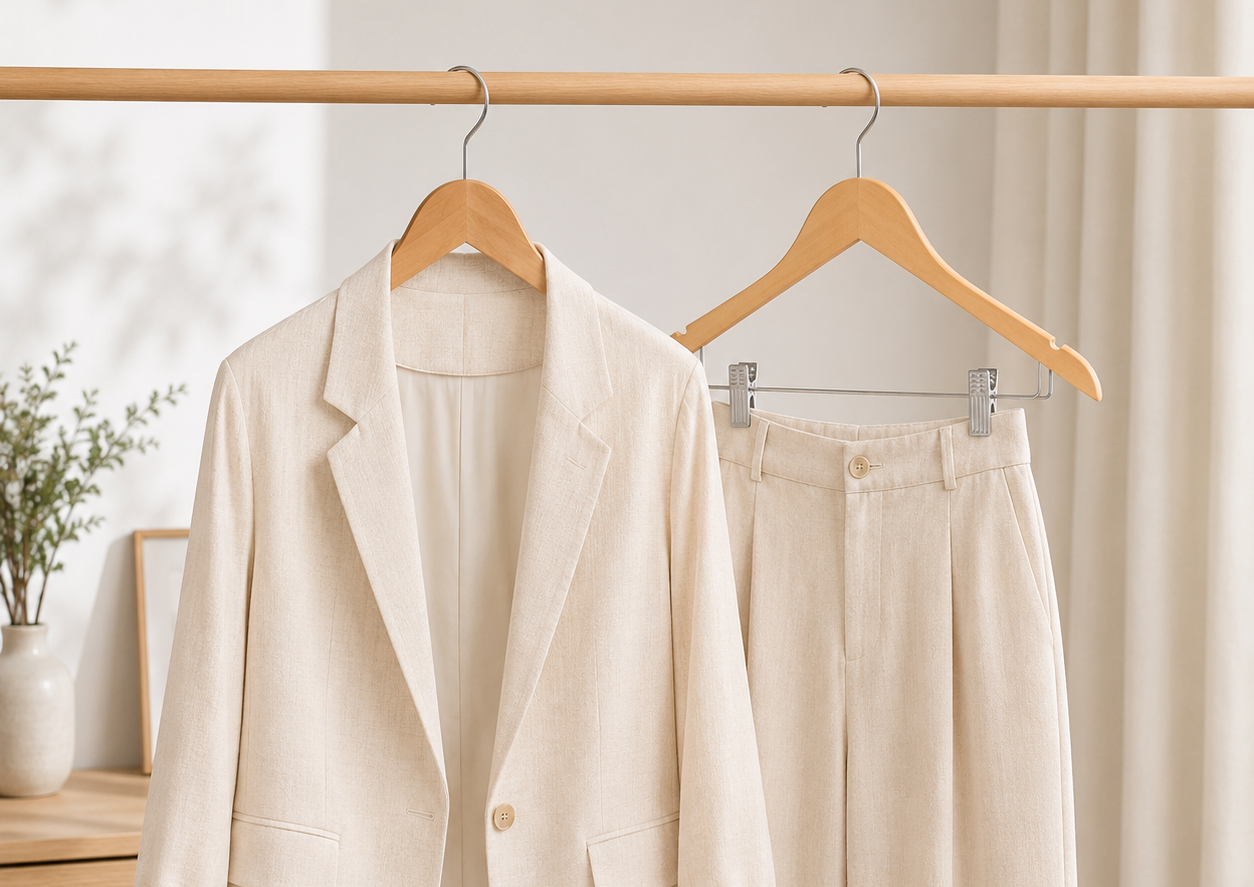
Wooden hangers are widely used in premium retail environments because they enhance product presentation, improve perceived brand value, and support long-term durability.
Compared with plastic or wire alternatives, wooden hangers create a more consistent and high-end visual merchandising experience, making them a preferred choice for fashion retailers, department stores, and luxury brands.
For global buyers, wooden hangers are not just functional tools—they are part of the brand presentation system.
In retail environments, hangers are not just accessories. They directly influence how customers perceive clothing quality.
A well-designed hanger system can:
Improve product presentation
Strengthen brand identity
Increase perceived product value
Create visual consistency across stores
Support premium positioning
This is why wooden hangers are commonly used in mid-to-high-end retail spaces.
One of the most important advantages of wooden hangers is their visual impact.
Retail display is highly visual. Customers often judge product quality within seconds.
Wooden hangers provide:
Natural warm tones
Clean and structured appearance
Uniform display consistency
High-end boutique feel
This makes clothing appear more premium even before customers touch the product.
Wooden hangers contribute directly to brand perception.
Reinforces luxury positioning
Aligns with premium store environments
Supports cohesive visual identity
Differentiates from mass-market competitors
Many fashion brands use wooden hangers as part of their broader retail design system, not just as storage tools.
Retail environments require hangers that can withstand constant handling.
High load-bearing strength
Resistance to deformation
Long service life
Suitable for heavy garments (coats, suits, jackets)
This durability reduces replacement frequency, especially in high-traffic stores.
Sustainability has become a major factor in retail purchasing decisions.
Wooden hangers support eco-friendly branding by:
Reducing plastic usage
Using renewable materials (depending on sourcing)
Supporting natural material aesthetics
Aligning with sustainable retail initiatives
For many brands, this is an important part of ESG and sustainability messaging.
Uniformity is critical in premium retail display.
Standardized shape and thickness
Consistent color tone (natural or stained finishes)
Clean alignment across product categories
Professional store appearance
This consistency improves the overall shopping experience.
Certain garments require better support and presentation.
Suits
Blazers
Coats
Dresses
Premium shirts
Wooden hangers help maintain garment shape and reduce distortion, which is essential in high-end retail environments.
| Material | Visual Appeal | Durability | Retail Use | Brand Positioning |
|---|---|---|---|---|
| Wood | High | High | Premium retail | Luxury / Mid-high |
| Plastic | Medium | Medium | Mass retail | Budget |
| Metal | Low-Medium | High | Utility use | Industrial |
| Velvet-covered | High | Medium | Boutique | Fashion premium |
Wood remains the most balanced option for premium retail display systems.
Modern retail stores are designed as experience spaces, not just product storage areas.
Wooden hangers help create:
Boutique-style presentation
Luxury shopping atmosphere
Consistent visual storytelling
Higher perceived product value
This directly impacts customer purchasing behavior.
Wooden hangers are also highly customizable for brands.
Logo printing or engraving
Custom shapes (shoulder design, clip style, etc.)
Color staining (black, walnut, natural wood)
Anti-slip features
Retail packaging design
This makes them suitable for both retail display systems and branded merchandise programs.
Vietnam has become an important sourcing hub for wooden hangers and closet organization products.
Experience in woodworking, finishing, and assembly.
Strong supply chains for US and EU retail markets.
Ability to support custom designs and branding.
Manufacturers often also produce:
Bamboo organizers
Woven storage baskets
Fabric storage bins
This supports full home organization collections.
In premium retail, hangers are no longer treated as simple accessories.
They are part of:
Store design systems
Brand identity architecture
Visual merchandising strategy
Customer perception management
This is why many global retailers invest in upgrading from plastic hangers to wooden systems.
Wooden hangers are preferred in premium retail display because they combine durability, aesthetics, and brand-enhancing visual impact.
They help retailers present clothing in a more structured, consistent, and high-value way while supporting sustainability and long-term cost efficiency.
For fashion brands, department stores, and home organization retailers, wooden hangers are not just functional tools—they are a key part of the overall merchandising strategy.
Vietnam’s manufacturing capabilities further strengthen this category by offering OEM customization, export-ready quality, and integration with broader home organization product lines.
Because they improve visual presentation, support brand positioning, and create a more luxurious shopping experience compared to plastic or wire hangers.
Yes. Wooden hangers offer better durability, appearance, and brand perception, especially in mid-to-high-end retail environments.
Yes. They can be customized with logos, finishes, shapes, and packaging for private-label and OEM production.
They are generally considered more eco-friendly than plastic hangers, especially when made from responsibly sourced wood materials.
Because hangers directly influence product presentation, brand perception, and the overall customer shopping experience.
Looking for clothes hanger products?
Contact EISHO Vietnam for OEM& ODM manufacturing solutions
Product Listing: Wooden Hanger
Product Listing: Velvet Flocked Hanger
Kitchen Organization Solutions Using Bamboo and Baskets
Back to Materials Hub → https://www.vnhomepro.com/materials/

OEM Products Services
Our dedicated product design and development teams allow us to create custom-made products that meet your budget. From concept to production and delivery, we handle the entire process. With a focus on practicality and aesthetics, our custom products are designed to help you achieve your goals.